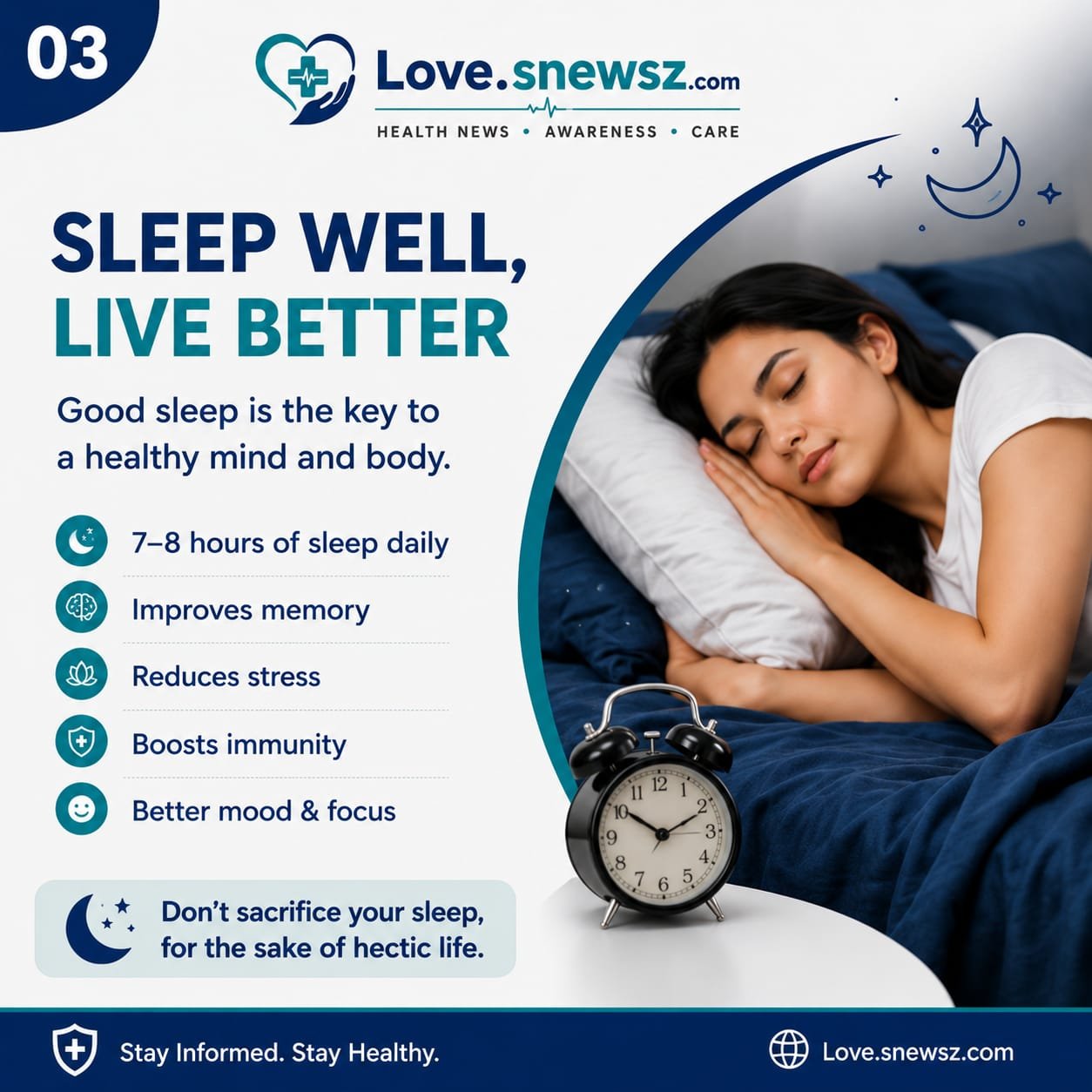
Good sleep is not a luxury—it is a basic part of a healthy lifestyle. Your body and brain use sleep to recover, process information, regulate important functions, and prepare you for the day ahead. Yet, busy schedules, stress, late-night screen time, work, and irregular routines can make getting enough quality sleep surprisingly difficult.
For most adults, experts recommend getting 7–9 hours of sleep each night. Regularly getting less than the recommended amount can affect concentration, memory, mood, physical health, and overall quality of life.
So, why is sleep so important, and what can you do to improve your sleep naturally?
What Is Healthy Sleep?
Healthy sleep is about more than simply spending a certain number of hours in bed.
Good sleep involves:
- Getting enough sleep for your age and individual needs
- Maintaining a reasonably consistent sleep schedule
- Getting good-quality, uninterrupted sleep
- Feeling reasonably refreshed and alert during the day
- Not regularly experiencing excessive daytime sleepiness
For adults, 7–9 hours per night is generally recommended. The American Academy of Sleep Medicine and Sleep Research Society recommend that adults get at least 7 hours of sleep regularly to support optimal health.
However, sleep requirements can vary depending on age, health, lifestyle, and individual circumstances.
Why Is Sleep Important for Your Health?
Sleep affects almost every part of your body. While you are asleep, your brain and body continue performing important processes that support physical recovery, cognitive function, emotional regulation, and overall health.
Research from the National Heart, Lung, and Blood Institute (NHLBI) notes that getting enough quality sleep can support both mental and physical health, while ongoing sleep deficiency can interfere with thinking, learning, memory, emotional regulation, and daily performance.
Here are some of the major benefits of getting enough quality sleep.
1. Sleep Supports Memory and Learning
Having trouble remembering things or concentrating during the day may sometimes be connected to inadequate sleep.
Sleep plays an important role in learning and memory. During sleep, the brain processes and helps consolidate information acquired during the day. Getting enough quality sleep can support attention, learning, problem-solving, and memory.
This is particularly important for students, professionals, creators, and anyone whose daily activities require concentration and decision-making.
Better sleep can mean a better-functioning brain.
2. Sleep Helps Manage Stress and Emotions
A poor night’s sleep can leave you feeling irritable, overwhelmed, or mentally exhausted.
Sleep and emotional health are closely connected. Sleep deficiency can make it harder to manage emotions, make decisions, solve problems, and cope with everyday challenges.
When you consistently get enough quality sleep, your brain gets the opportunity to recover and prepare for another day.
That is why improving sleep can be an important part of a broader stress-management and emotional-wellness routine.
3. Sleep Supports Physical Health
Your body does important maintenance work while you sleep.
Quality sleep supports physical recovery and contributes to healthy functioning of several systems in the body. Long-term sleep deficiency has been associated with increased risks of conditions such as high blood pressure, heart disease, obesity, diabetes, and stroke.
Sleep should therefore be considered part of your overall health routine—just like nutritious food and regular physical activity.
4. Sleep Supports the Immune System
Your immune system also benefits from healthy sleep.
Research indicates that sleep influences immune-system activity, while ongoing sleep deficiency can affect the body’s ability to respond effectively to infections.
This does not mean that sleeping more will automatically prevent illness. Instead, it highlights why maintaining healthy sleep habits is an important part of taking care of your overall health.
5. Sleep Can Improve Daytime Focus and Performance
Ever had a day when everything felt slower after a bad night’s sleep?
Sleep deficiency can affect attention, reaction time, decision-making, productivity, and the ability to complete everyday tasks efficiently. It can also increase mistakes and impair performance.
Adequate sleep can help you wake up more alert and better prepared to handle the demands of the day.
This becomes especially important when driving, operating machinery, or performing tasks that require sustained attention.
How Much Sleep Do Adults Need?
For most adults, the general recommendation is:
7–9 hours of sleep per night.
The minimum recommended amount for healthy adults is generally 7 hours on a regular basis, although individual needs can vary.
It is also important to understand that sleep quality matters. Getting eight hours in bed but waking repeatedly throughout the night may not provide the same restorative experience as consistent, good-quality sleep.
Recommended Sleep by Age
| Age Group | Recommended Sleep |
|---|---|
| Babies 4–12 months | 12–16 hours, including naps |
| Children 1–2 years | 11–14 hours, including naps |
| Children 3–5 years | 10–13 hours, including naps |
| Children 6–12 years | 9–12 hours |
| Teenagers 13–18 years | 8–10 hours |
| Adults | 7–9 hours |
These recommendations are based on guidance summarized by the NHLBI and American Academy of Sleep Medicine recommendations.
What Happens When You Don’t Get Enough Sleep?
Occasionally sleeping less than usual may make you tired the next day. The bigger concern is regular or ongoing sleep deficiency.
Insufficient sleep can contribute to:
- Difficulty concentrating
- Poorer memory and learning
- Slower reaction time
- Increased mistakes
- Mood changes
- Difficulty managing emotions
- Daytime sleepiness
- Reduced productivity
- Increased risk of accidents
- Long-term health problems
NHLBI reports that ongoing sleep deficiency can affect both mental and physical health and is associated with several chronic health conditions.
One particularly important issue is drowsy driving. If you feel extremely sleepy, your reaction time and ability to make safe decisions can be impaired.
Simple Healthy Sleep Habits That Can Help
Improving sleep does not always require complicated changes. Start by making your sleep routine more consistent.
1. Keep a Consistent Sleep Schedule
Try to go to bed and wake up around the same time every day, including weekends.
A consistent schedule can help support your body’s sleep-wake rhythm.
2. Give Yourself Enough Time to Sleep
One of the simplest mistakes is going to bed too late and expecting to function normally on limited sleep.
If you need 7–9 hours, build enough time into your schedule to realistically achieve that amount.
3. Create a Relaxing Pre-Bed Routine
Use the hour before bedtime to slow down.
You could:
- Read a book
- Take a warm bath or shower
- Practice relaxation techniques
- Listen to calm music
- Dim the lights
- Put away work-related tasks
NHLBI recommends using the hour before bed for quiet time and reducing exposure to bright artificial light.
4. Make Your Bedroom Sleep-Friendly
A bedroom that is quiet, cool, dark, and comfortable can make it easier to sleep.
Try to remove unnecessary distractions and keep your sleeping environment comfortable.
5. Be Careful With Caffeine
Caffeine can interfere with sleep, particularly when consumed later in the day.
If you notice that coffee, tea, energy drinks, or other caffeinated beverages affect your sleep, consider reducing them or consuming them earlier.
NHLBI recommends avoiding caffeine as part of healthy sleep habits.
6. Stay Physically Active
Regular physical activity can support overall health and may help promote better sleep.
Spending time outdoors and staying physically active are among the healthy sleep habits recommended by NHLBI.
7. Avoid Heavy Meals Close to Bedtime
Eating a very large or heavy meal shortly before sleeping may make it harder for some people to feel comfortable at bedtime.
NHLBI recommends avoiding heavy or large meals within a couple of hours of bedtime.
Sleep Should Not Be the First Thing You Sacrifice
Modern life often rewards being busy.
Late-night work.
Endless scrolling.
One more episode.
One more email.
One more task.
But repeatedly sacrificing sleep can come at a cost.
Sleep is not simply “doing nothing.” While you sleep, your brain and body are carrying out important processes that support health, recovery, memory, immune function, and daytime performance.
Instead of thinking:
“I’ll sleep when everything is finished.”
Try thinking:
“Sleep is part of what helps me function well tomorrow.”
When Should You Talk to a Doctor About Sleep?
Occasional sleep problems happen to many people. However, persistent problems should not simply be ignored.
Consider talking to a healthcare professional if you regularly:
- Have difficulty falling asleep
- Wake up repeatedly during the night
- Feel excessively sleepy during the day
- Wake up feeling unrefreshed despite getting enough time in bed
- Snore loudly or experience possible breathing interruptions during sleep
- Have ongoing sleep problems that interfere with daily life
Persistent sleep problems can sometimes be related to an underlying sleep disorder or another health issue.
Frequently Asked Questions About Healthy Sleep
Is 7 hours of sleep enough for adults?
For many adults, 7 hours meets the minimum recommended amount. However, experts generally recommend 7–9 hours per night for adults, and individual sleep needs can vary.
Is 8 hours of sleep better than 7 hours?
Both can fall within the recommended range for adults. The goal is not to chase one exact number but to get enough good-quality sleep to support your health and daytime functioning.
Can sleeping on weekends make up for lost sleep?
Sleeping longer on days off may make you feel better temporarily, but it does not fully replace the benefits of consistent nighttime sleep. Large changes in your sleep schedule can also disrupt your body’s sleep-wake rhythm.
Does sleep improve memory?
Yes. Sleep plays an important role in learning and memory formation, and inadequate sleep can interfere with concentration and clear thinking.
Does lack of sleep affect mental health?
Sleep deficiency can affect mood, emotional regulation, decision-making, and the ability to cope with stress. Ongoing sleep problems are also associated with several mental-health concerns.
Final Thoughts: Sleep Well, Live Better
Good sleep is one of the simplest foundations of a healthier lifestyle.
You do not need a perfect bedtime routine overnight. Start with the basics: give yourself enough time to sleep, maintain a consistent schedule, create a relaxing bedtime environment, and pay attention to persistent sleep problems.
Getting enough quality sleep can support your memory, focus, mood, physical health, immune function, and everyday performance.
So tonight, instead of treating sleep as time you’re losing, remember what you’re gaining:
A healthier body.
A clearer mind.
Better focus.
Better recovery.
A better tomorrow.
Don’t sacrifice your sleep for the sake of a hectic life.
Medical Disclaimer
This article is intended for general educational and informational purposes only and should not be considered medical advice, diagnosis, or treatment. Sleep needs and health conditions vary from person to person. If you have persistent sleep difficulties, excessive daytime sleepiness, or concerns about your sleep health, consult a qualified healthcare professional.
Sources
- National Heart, Lung, and Blood Institute (NHLBI), National Institutes of Health — Sleep Deprivation and Deficiency
- National Heart, Lung, and Blood Institute (NHLBI), National Institutes of Health — How Sleep Works
- National Heart, Lung, and Blood Institute (NHLBI), National Institutes of Health — Healthy Sleep Habits
- American Academy of Sleep Medicine & Sleep Research Society — Recommended Amount of Sleep for a Healthy Adult
SEO Publishing Details
Primary Keyword: importance of sleep
Secondary Keywords:
- benefits of good sleep
- why sleep is important
- healthy sleep habits
- how much sleep do adults need
- 7 to 9 hours of sleep
- sleep and mental health
- sleep and memory
- benefits of quality sleep
- effects of sleep deprivation
- tips for better sleep
Suggested SEO Title:
Sleep Well, Live Better: Importance of Sleep for Mind & Body
Suggested Meta Description:
Discover why sleep is important for your mind and body. Learn the benefits of quality sleep, recommended sleep hours, effects of sleep deprivation, and healthy sleep habits.
Suggested URL Slug:/importance-of-sleep/
Suggested H1:
Sleep Well, Live Better: Why Good Sleep Is Essential for Your Mind and Body
Suggested Featured Image Alt Text:
Woman sleeping peacefully in bed with text about the importance of good sleep
Suggested Image Title:
Sleep Well, Live Better – Importance of Good Sleep
Suggested Image Caption:
Getting enough quality sleep supports healthy brain function, physical health, mood, and daily performance.