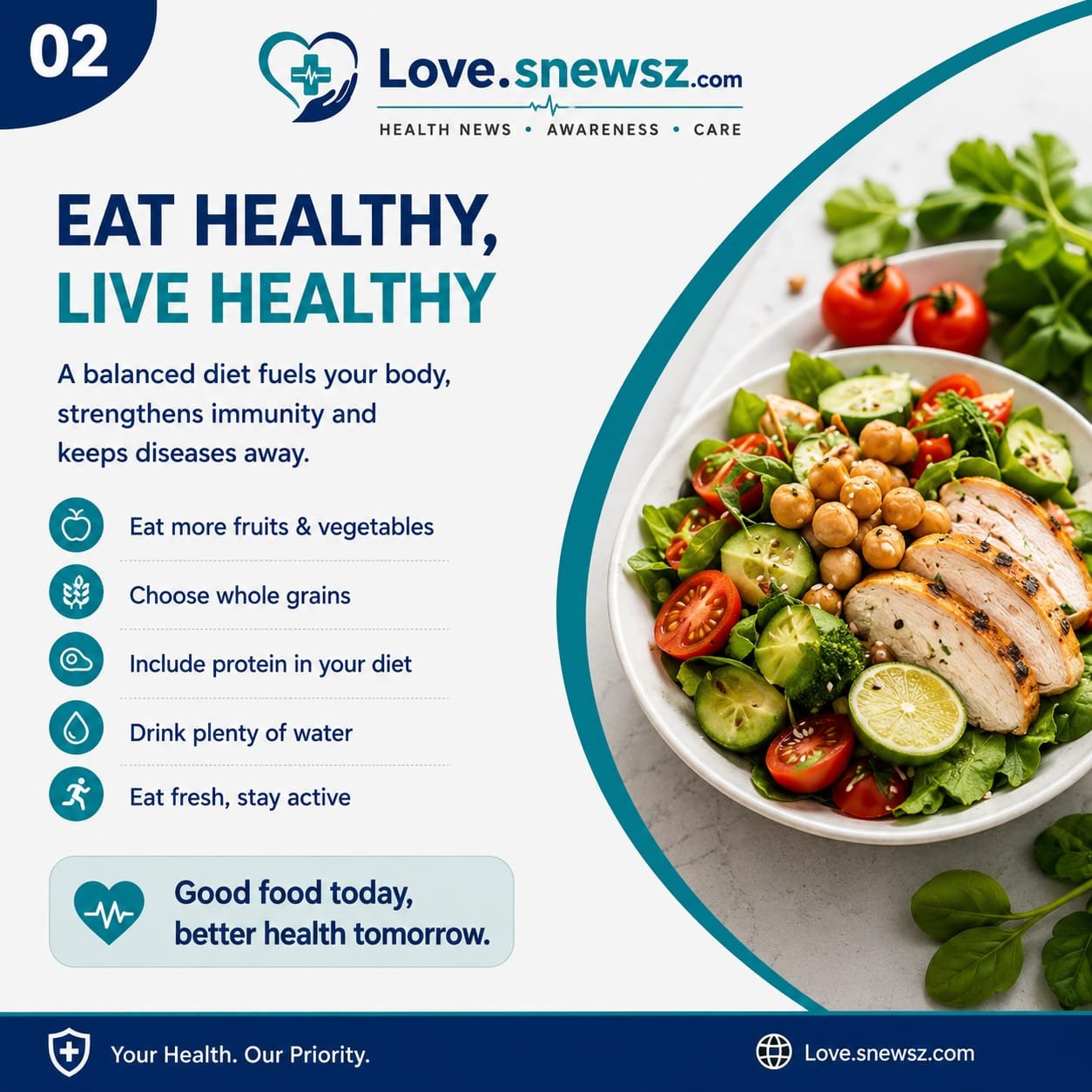
Good food today, better health tomorrow.
Food is more than something we eat when we feel hungry. The foods we choose every day provide the energy, protein, vitamins, minerals, fibre and other nutrients our bodies need to function properly.
A healthy diet can support overall wellbeing and help reduce the risk of several diet-related health problems, including cardiovascular disease, type 2 diabetes and some cancers. However, healthy eating does not mean following an extremely restrictive diet or completely eliminating your favourite foods.
The goal is to build a balanced, varied and sustainable eating pattern that fits your health needs, lifestyle and culture.
According to the World Health Organization (WHO), the core principles of a healthy diet are adequacy, balance, moderation and diversity.
What Is a Healthy and Balanced Diet?
A balanced diet provides your body with a variety of nutrients from different food groups.
A healthy eating pattern can include:
- Fruits and vegetables
- Whole grains
- Pulses and legumes
- Nuts and seeds
- Healthy sources of protein
- Dairy or suitable alternatives
- Healthy unsaturated fats
- Adequate fluids, especially water
The exact combination does not need to look the same for everyone. Age, activity level, health status, dietary preferences, culture and locally available foods can all influence what an appropriate healthy diet looks like.
In other words:
There is no single “perfect diet” for everyone.
What matters is the overall quality and balance of your eating pattern.
Why Is Healthy Eating Important?
Your body constantly needs nutrients to maintain normal functions.
A nutritious diet can help provide the nutrients required for energy production, growth, tissue maintenance, immune function and many other biological processes.
WHO notes that healthy diets can help protect against malnutrition and reduce the risk of several noncommunicable diseases, including heart disease, stroke, diabetes and certain cancers.
Healthy eating is therefore not just about weight.
It is about supporting your health throughout your life.
8 Important Principles of Healthy Eating
1. Eat More Fruits and Vegetables
Fruits and vegetables are important sources of vitamins, minerals, fibre and other beneficial compounds.
WHO recommends that people over the age of 10 aim for at least 400 grams of fruits and vegetables per day, which is roughly equivalent to five portions.
Try to include different colours and varieties rather than eating the same fruit or vegetable every day.
For example, your meals could include:
- Spinach
- Carrots
- Tomatoes
- Cucumber
- Broccoli
- Cauliflower
- Peas
- Bananas
- Apples
- Oranges
- Papaya
- Guava
- Berries
The more variety you include, the broader the range of nutrients your diet can provide.
Simple tip:
Instead of thinking, “I need to eat healthy,” think:
“How can I add one more fruit or vegetable to this meal?”
Small changes are easier to maintain.
2. Choose Whole Grains More Often
Whole grains contain more of the naturally occurring grain components than refined grains and are an important source of dietary fibre.
Examples include:
- Oats
- Whole-wheat atta
- Brown rice
- Barley
- Millet
- Whole-grain bread
- Quinoa
WHO recommends that carbohydrates primarily come from sources such as whole grains, vegetables, fruits and pulses.
This does not mean that foods such as white rice or regular roti can never be eaten.
Instead, consider gradually replacing some refined grains with whole-grain alternatives where practical.
3. Include Protein in Your Diet
Protein is an essential nutrient that your body uses for numerous functions, including maintaining and repairing tissues.
Healthy protein sources can include both plant and animal foods, depending on your dietary preferences.
Plant-based protein sources:
- Dal
- Rajma
- Chickpeas
- Soy
- Tofu
- Peanuts
- Almonds
- Seeds
Animal-based protein sources:
- Eggs
- Fish
- Chicken
- Milk
- Curd
- Other dairy products
WHO recommends a varied diet that includes foods such as legumes, nuts, whole grains, vegetables and appropriate protein sources.
For people following a vegetarian diet, combining different plant-based foods throughout the day can help create a nutritious eating pattern.
4. Don’t Forget Healthy Fats
Fat is not something that needs to be completely removed from your diet.
Your body needs fat for normal biological functions, but the type of fat matters.
Unsaturated fats are generally preferred over saturated and trans fats. Sources of healthier unsaturated fats include nuts, seeds, avocados and several plant oils.
Try to limit foods that are particularly high in unhealthy fats, especially industrially produced trans fats.
Healthy eating is not about being “fat-free.”
It is about choosing better sources of fat and keeping portions appropriate.
5. Limit Added and Free Sugars
Sweet foods and drinks can be part of a balanced diet, but consuming large amounts of free sugars regularly can make it harder to maintain a healthy dietary pattern.
WHO recommends keeping free sugar intake below 10% of total daily energy intake, with additional benefits possible when intake is reduced further.
Common sources include:
- Sugary soft drinks
- Sweetened beverages
- Sweets
- Cakes
- Cookies
- Desserts
- Syrups
- Added sugar in tea and coffee
One simple change is to replace sugary beverages with water more often.
6. Reduce Excess Salt
Salt is commonly used to add flavour to food, but consuming too much sodium can increase blood pressure and contribute to cardiovascular health risks.
WHO recommends that adults consume less than 5 grams of salt per day, equivalent to less than 2 grams of sodium.
Salt can come from more than just the salt shaker.
Processed foods, packaged snacks, sauces, instant foods and other prepared products can contribute significant amounts of sodium to the diet.
Easy ways to reduce salt:
- Taste food before adding extra salt
- Limit salty packaged snacks
- Check nutrition labels
- Use herbs and spices for flavour
- Reduce highly processed foods
- Be mindful of salty sauces and condiments
7. Drink Enough Water
Hydration is another important part of a healthy lifestyle.
Water helps your body maintain normal functions and is a simple everyday beverage choice.
Your fluid needs vary depending on factors such as weather, physical activity, diet and individual health needs.
Instead of following an unrealistic fixed water target, make hydration a regular daily habit.
Keep a water bottle nearby.
Drink regularly.
Drink more when you are sweating or spending time in hot weather.
8. Stay Physically Active
Healthy eating works best as part of a broader healthy lifestyle.
Nutrition and physical activity complement each other.
Regular physical activity can support cardiovascular health, physical fitness, metabolic health and overall wellbeing.
This does not necessarily mean spending hours in a gym.
Activities such as:
- Walking
- Cycling
- Running
- Swimming
- Strength training
- Sports
- Household activities
can all contribute to an active lifestyle.
Healthy food provides your body with nutrients and energy, while movement helps your body use that energy and maintain physical fitness.
What Should a Healthy Plate Look Like?
One simple way to think about a balanced meal is to include several food groups rather than focusing on one “superfood.”
Harvard’s Healthy Eating Plate suggests making roughly half the plate vegetables and fruits, one-quarter whole grains and one-quarter healthy protein, along with healthy plant oils and water as a preferred beverage.
For an Indian meal, this concept could look like:
Half the meal
Vegetables and/or salad.
About one-quarter
Whole grains or other nutritious carbohydrate sources such as:
- Roti
- Brown rice
- Millets
- Oats
- Other whole grains
About one-quarter
A protein source such as:
- Dal
- Rajma
- Chana
- Paneer
- Tofu
- Eggs
- Fish
- Chicken
The exact proportions do not have to be perfect at every meal.
Think of it as a simple framework, not a strict rule.
Healthy Eating Does Not Mean Eating Boring Food
One of the biggest misconceptions about healthy eating is that nutritious food has to be bland.
It doesn’t.
Indian cuisine already offers a huge variety of nutritious ingredients:
- Dal
- Chana
- Rajma
- Seasonal vegetables
- Fruits
- Curd
- Paneer
- Millets
- Whole grains
- Nuts
- Seeds
- Herbs and spices
The key is often how frequently you eat certain foods, how much you eat, and how your overall diet is balanced.
You don’t have to completely give up your favourite foods.
Instead, make nutrient-dense foods the foundation of your everyday diet and keep foods high in added sugar, excess salt and unhealthy fats more limited.
Processed Food vs. Whole Foods
Modern lifestyles have made packaged and highly processed foods extremely convenient.
The problem isn’t that every processed food is automatically unhealthy.
Processing can include everything from washing and freezing vegetables to more intensive manufacturing.
The bigger concern is regularly relying on highly processed foods that are high in free sugars, sodium, unhealthy fats and calories while providing relatively little nutritional value. WHO identifies diets high in these components as a major concern for health.
A practical approach is:
Eat more minimally processed foods.
Limit highly processed foods.
Read food labels.
Focus on the overall pattern.
Healthy Eating on a Budget
Eating healthy does not necessarily require expensive “superfoods.”
Some affordable nutritious options include:
- Seasonal fruits
- Seasonal vegetables
- Dal
- Chana
- Rajma
- Peanuts
- Oats
- Whole grains
- Eggs
- Curd
- Local vegetables
Buying seasonal produce and planning meals in advance can also help reduce unnecessary spending and food waste.
Healthy eating should be practical and sustainable, not something that becomes financially stressful.
Common Healthy Eating Mistakes
Mistake 1: Completely Eliminating Carbohydrates
Carbohydrates are an important source of energy.
The quality of carbohydrate matters. WHO recommends getting carbohydrates primarily from whole grains, vegetables, fruits and pulses rather than relying heavily on refined or highly processed sources.
Mistake 2: Thinking One Food Can Make You Healthy
There is no single food that can replace a balanced diet.
Eating one “superfood” while ignoring vegetables, protein, fibre, sleep and physical activity will not create a healthy lifestyle.
Overall dietary pattern matters more than one ingredient.
Mistake 3: Following Extreme Diets
Very restrictive diets may be difficult to maintain and can make it harder to obtain a broad range of nutrients.
A healthy diet should be realistic enough to follow consistently.
Mistake 4: Ignoring Portion Sizes
Even nutritious foods can contribute excess calories when consumed in very large amounts.
Healthy eating involves both food quality and appropriate quantity.
Mistake 5: Drinking Calories Without Realising It
Sugary drinks can add substantial amounts of free sugar to your diet.
Choosing water or other unsweetened beverages more often can be a simple improvement.
A Simple Healthy Eating Routine
You don’t need to completely change your diet overnight.
Start with five simple habits:
Morning
Start your day with a nutritious breakfast that includes a combination of protein, whole grains or other high-fibre carbohydrates, and fruit or vegetables where practical.
Lunch
Build your meal around vegetables, a protein source and a nutritious carbohydrate.
Evening Snack
Choose fruit, unsalted nuts, yoghurt/curd or another nutrient-dense option instead of making highly processed snacks your everyday choice.
Dinner
Keep your meal balanced and include vegetables and a protein source.
Throughout the Day
Drink water regularly and stay physically active.
The goal is consistency, not perfection.
A Healthy Diet Is About Balance, Not Perfection
You don’t have to eat perfectly every single day.
There may be birthdays, festivals, celebrations, restaurant meals, travel and days when you simply want your favourite food.
That’s normal.
Healthy eating is about what you do most of the time, not one meal.
Instead of thinking:
“I ate something unhealthy, so my diet is ruined.”
Think:
“That was one meal. I’ll make a healthier choice at my next meal.”
This mindset makes healthy habits much easier to maintain over the long term.
Frequently Asked Questions About Healthy Eating
What is a balanced diet?
A balanced diet provides adequate amounts of essential nutrients while maintaining balance, moderation and variety. It generally includes a wide range of vegetables, fruits, whole grains, pulses, protein sources, healthy fats and appropriate fluids.
How many fruits and vegetables should I eat every day?
WHO recommends at least 400 grams of fruits and vegetables per day for people over 10 years of age.
Is rice healthy?
Rice can absolutely be part of a healthy diet. The type, portion size and overall meal composition matter. Whole-grain options such as brown rice can provide more fibre than refined rice.
Is protein necessary every day?
Protein is an essential nutrient, and your diet should contain appropriate protein sources. These can come from foods such as pulses, beans, nuts, seeds, dairy, eggs, fish or meat depending on your dietary pattern.
Should I stop eating sugar completely?
A healthy diet does not necessarily require eliminating every source of sugar. However, WHO recommends limiting free sugars, particularly those added to foods and drinks.
Is vegetarian food healthy?
Yes. A well-planned vegetarian diet can provide a wide variety of nutrients through foods such as vegetables, fruits, whole grains, pulses, legumes, nuts, seeds and dairy or suitable alternatives.
The important factor is variety and nutritional adequacy, not simply whether a diet contains meat.
What is the healthiest food?
There is no single “healthiest food.”
A healthy diet is built from a variety of nutritious foods rather than depending on one ingredient.
Final Thoughts: Eat Healthy, Live Healthy
Healthy eating doesn’t need to be complicated.
You don’t need to follow every food trend, buy expensive supplements or completely change your lifestyle overnight.
Start with the basics:
Eat more vegetables and fruits.
Choose whole grains more often.
Include adequate protein.
Choose healthier fats.
Limit excess sugar and salt.
Drink enough water.
Stay physically active.
Most importantly, build habits that you can maintain for years—not just for a few weeks.
Because good health isn’t created by one perfect meal.
It’s created by the choices you make consistently.
Good food today. Better health tomorrow. ❤️
Medical Disclaimer
This article is intended for general educational and informational purposes only and should not be considered medical advice, diagnosis or treatment. Individual nutritional requirements vary according to age, health status, activity level, dietary preferences and other factors. People with specific medical conditions, allergies, eating disorders or special nutritional requirements should consult a qualified healthcare professional or registered dietitian for personalised advice.
Sources & Further Reading
- World Health Organization (WHO) — Healthy Diet
- WHO India — Healthy Diet
- WHO — Healthy Diet: Keys to Eating Well
- Harvard T.H. Chan School of Public Health — Healthy Eating Plate
SEO Publishing Details
Primary Keyword:
healthy diet
Secondary Keywords:
- healthy eating
- balanced diet
- benefits of healthy eating
- healthy food
- healthy lifestyle
- nutritious diet
- foods for a healthy diet
- importance of healthy eating
- healthy eating habits
- balanced diet benefits
- fruits and vegetables benefits
- whole grains
- protein rich foods
SEO Title:
Eat Healthy, Live Healthy: Complete Guide to a Balanced Diet
Meta Description:
Learn how to eat healthy with this complete guide to a balanced diet. Discover healthy foods, fruits, vegetables, whole grains, protein, hydration and simple eating habits.
URL Slug:/healthy-diet-balanced-diet/
H1:
Eat Healthy, Live Healthy: Why a Balanced Diet Matters for Your Health
Featured Image Alt Text:
Healthy balanced meal with vegetables, chickpeas and protein-rich foods
Image Caption:
A balanced diet combines a variety of nutritious foods to support overall health and wellbeing.
Suggested Internal Links:
- Importance of Drinking Water
- Importance of Getting Enough Sleep
- Benefits of Regular Exercise
- Healthy Lifestyle Habits
- How to Prevent Dehydration
- Importance of Mental Health
Suggested FAQ Schema Questions:
- What is a balanced diet?
- How many fruits and vegetables should I eat every day?
- Is rice healthy?
- Is protein necessary every day?
- Should I stop eating sugar completely?
- Is vegetarian food healthy?
- What is the healthiest food?